
Mobile Service can create a lot of business opportunities, and an equal amount of challenges. See how one business made it work for them.

The trucking industry has long been the backbone of the economy in the United States, but with its importance comes the constant challenge of keeping fleets on the road and minimizing downtime. As of 2024, the U.S. truck repair sector is home to over 46,000 businesses, with a market size of over $10 billion.
While traditional repair shops remain vital, mobile repair services have emerged as a key opportunity to meet the demand that customers desperately need to maintain their own bottom lines. After all, time is money, and these services allow repair technicians to travel directly to the customer’s real-time location, getting them on the move faster and eliminating the need for vehicles to leave service routes.
For truck repair companies considering adding mobile repair to their service offerings, the opportunity is significant—but so are the challenges. In this article, we’ll explore industry trends, strategies for success and firsthand insights from DRIVE client Kris Bullinger, co-owner of Olympic Truck Service in Tumwater, WA, a company that successfully implemented its mobile repair program.
Answering the Call: The Rising Demand for On-the-Go Repairs
The shift toward mobile repair services in the trucking industry has been driven by the need for greater efficiency. Fleet operators often lose valuable time transporting trucks to repair shops, waiting for diagnosis and retrieving vehicles post-repair. Mobile repair provides a solution, enabling fleets to have maintenance and repairs completed wherever the trucks are—whether at the customer’s yard or roadside.
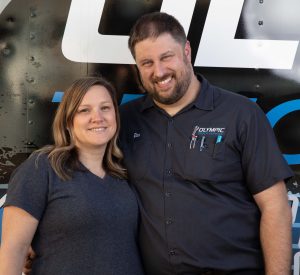
Kris and Dan Bullinger of Olympic Truck Service
According to Kris Bullinger, this growing demand was precisely what inspired Olympic Truck Service to formalize its mobile repair program. “We always had a mobile truck for after-hours roadside calls,” Bullinger explains. “In 2019, we started tracking how many calls we were getting for on-site work. It turned out to be an underserved market in our area.”
The company responded by purchasing a used box truck in 2020 and dedicating it to mobile repairs. The result? “It completely changed our operations. It added a new revenue stream and allowed us to serve more customers.”
This shift represents a broader trend across the industry, where fleets are increasingly relying on mobile services to conduct routine maintenance, diagnostics and minor repairs while minimizing disruptions to daily operations.
A Game-Changer for Customers and Repair Shops Alike
Mobile repair services aren’t just convenient for fleet operators—they’re transformative for repair shops and technicians as well. By meeting customers where they are, shops can strengthen relationships, boost efficiency and tap into a growing demand for on-site solutions. It’s a win-win scenario that redefines how repairs are handled and how customer loyalty is built.
Appeal For the Next Generation of Technicians
Young automotive technicians are increasingly drawn to mobile repair for its flexibility, independence and direct customer interaction. Setting their own schedules allows for better work-life balance, while engaging with clients builds trust and enhances their reputation. Many see mobile repair as a steppingstone to entrepreneurship, leveraging positive online reviews to grow their brand and attract new customers. In an industry that often struggles to attract young people to the field, offering more diverse opportunities like mobile repair can make the profession more appealing to the next generation.
Customer Convenience and Efficiency
The most obvious advantage of mobile repair is customer convenience. By bringing repair services to the truck, businesses eliminate unnecessary vehicle downtime caused by trips to and from repair facilities. This approach is especially useful for routine services like preventive maintenance (PM) inspections, brake work, and trailer repairs.
Enhanced Fleet Relationships
Mobile repair programs often result in stronger customer relationships. Bullinger notes that offering on-site services has helped Olympic Truck Service build trust and loyalty among their clients. “It allows us to be a one-stop shop for most of our customers’ needs,” she shares.
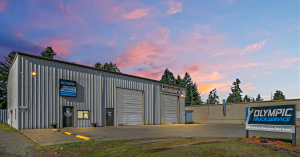
Olympic Truck Service of Tumwater, WA
Expanding Revenue Streams
For repair shops, mobile services represent a new avenue for generating revenue. They can attract customers who otherwise might not use their services and gain a competitive edge in local markets. Olympic Truck Service now operates two mobile trucks, a testament to the program’s success.
Overcoming the Speed Bumps of Launching Mobile Repair Services
Despite its potential, mobile repair isn’t without hurdles. Implementing a successful program requires careful planning, significant investment and a strong understanding of what services are feasible to perform on-site. Bullinger candidly shares that the first year of their program was far from smooth. “We made the mistake of trying to do too much,” she recalls. “We took on every fleet that called, regardless of their size, type of units or services requested. It stretched us
thin, and we didn’t have the right personnel in place. It took time to realize we needed to focus on fleets that matched our strengths and bring consistency to the program.”
Ultimately, Olympic Truck Service overcame these challenges by moving a skilled technician from their shop to the mobile team. “He brought the consistency we needed. He could write up his own repair orders, source parts and complete repairs independently. That’s when things really started to click.”
Technical and Logistical Challenges
Operating a mobile unit presents logistical hurdles. Technicians must be well-trained, adaptable and capable of working in various conditions. They often have to diagnose issues quickly, sometimes with limited tools. Furthermore, scheduling and dispatching technicians efficiently is essential to minimize downtime and maintain profitability.
Bullinger emphasizes the importance of choosing the right services to offer. “Initially, we decided to do everything, which was a mistake. Now we focus on services like PMs, DOT inspections and brake work on trailers.”
Investments and Costs
Launching a mobile repair program requires upfront investment, sometimes a substantial one. Bullinger estimates that outfitting Olympic Truck Service’s first mobile truck cost about $25,000. This included the vehicle, a Welderator (welder, air compressor and generator in one), shelving, lighting and a custom wrap for marketing purposes.
“Keep in mind the ongoing costs, too,” she advises. “You need to factor in truck maintenance, technician wages and travel costs. That’s why it’s important to price your services carefully. Our mobile rates are about 20% higher than our shop rates, and we have a two-hour minimum for emergency calls to make sure we stay profitable.”
For shops considering mobile repair, it’s essential to conduct a detailed cost-benefit analysis. Research suggests that mobile repair services can yield a strong return on investment when properly planned and executed, particularly in areas with high demand and limited competition.
Marketing and Expanding Mobile Services
Marketing plays a crucial role in the success of any mobile repair program. Olympic Truck Service leverages digital marketing tools, including Google Ads and their website, to promote their mobile services. They also rely on outside sales efforts to build relationships with potential customers. “Marketing mobile services isn’t just about attracting new business—it’s about educating customers on the value of having repairs done on-site,” Bullinger says. “We’ve found that many fleets don’t realize how much time and money they could save with mobile maintenance.”
Industry Trends and the Future of Mobile Repair
As mobile repair services gain traction, the industry is seeing several trends that could shape its future. The integration of telematics and predictive maintenance is enabling technicians to
preemptively identify issues before they lead to breakdowns. Additionally, advancements in mobile diagnostic tools and software are allowing technicians to handle more complex repairs on-site.
According to market experts, the demand for mobile repair services will continue to grow as fleets prioritize convenience and efficiency. Customers increasingly prefer repair options that reduce disruptions to their operations, such as having multiple vehicles serviced in a single visit.
Bullinger sees mobile repair as a long-term growth area for her business. “Our goal is to open more locations and expand our mobile fleet. Customers like not having to pay employees to drop off and pick up trucks. It’s a win-win.”
For trucking businesses, mobile repair services present an exciting opportunity to boost revenue, enhance customer satisfaction and differentiate themselves in a competitive market. However, implementing a mobile program requires careful planning, investment and a willingness to learn from challenges along the way.
By focusing on the right services, hiring skilled technicians and maintaining a customer-centric approach, businesses can position themselves for success in this growing sector. As Bullinger puts it, “Mobile repair isn’t just about fixing trucks—it’s about meeting customers where they are and helping them keep their fleets running smoothly.”
In an industry that thrives on efficiency and reliability, mobile repair is not just the future—it’s a necessity. For businesses willing to embrace the challenges, the rewards of Going Mobile can be transformative!
# # #
Fleet Equipment link HERE
Brittany Crow, DRIVE








 For DRIVE clients, click